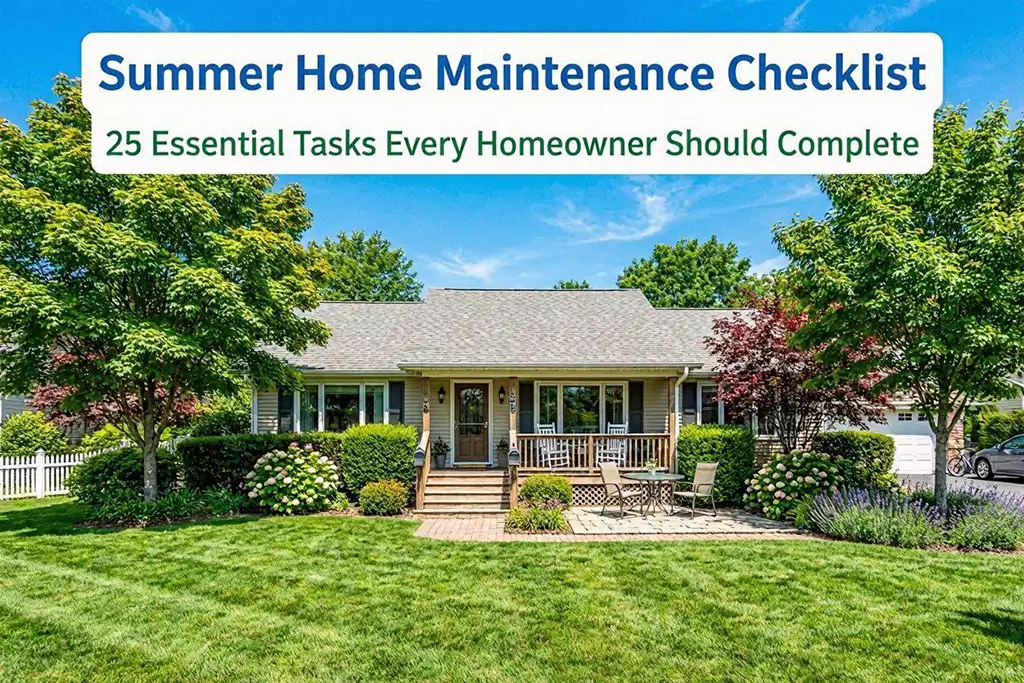
Summer is Meant to Be Enjoyed—Not Spent Dealing with Expensive Home Repairs
There’s nothing quite like summer. Longer days, backyard barbecues, family vacations, gardening, and evenings spent relaxing on the patio all make this one of the best times of the year.
Unfortunately, summer is also when many homeowners discover problems they didn’t notice during the winter and spring. An air conditioner suddenly stops cooling during a heat wave. A leaking garden hose wastes hundreds of gallons of water. Gutters overflow during a heavy thunderstorm. Small issues quickly become expensive repairs.
The good news is that most of these problems are preventable.
Spending just a few hours inspecting and maintaining your home now can help you avoid costly repairs later while keeping your home safer, more comfortable, and more energy efficient throughout the summer.
Whether you’ve owned your home for twenty years or just moved in this spring, this summer home maintenance checklist will walk you through the most important projects every homeowner should complete before the hottest part of the season arrives.
Let’s get started.
Your Summer Home Maintenance Checklist
Keep this checklist handy as you work through your home this season.
✅ Replace your HVAC air filter
✅ Clean around your outdoor air conditioner
✅ Test your irrigation or sprinkler system
✅ Inspect your roof from the ground
✅ Check windows and doors for air leaks
✅ Check smoke and carbon monoxide detectors
✅ Walk around your home one final time
💡 Pro Tip: Don’t feel like you need to complete all 25 tasks in one weekend. Many homeowners spread these projects out over several weeks. Even completing a few items now can help prevent costly repairs later in the summer.
Replace Your HVAC Air Filter
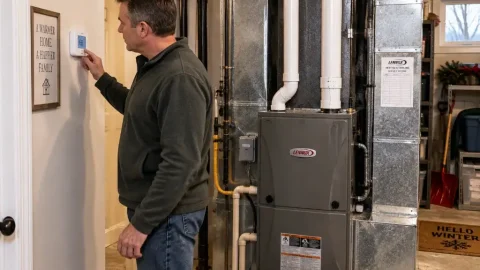
If there is one task you should never skip during the summer, it’s replacing your HVAC air filter.
Your air conditioner depends on unrestricted airflow to cool your home efficiently. As dust, pollen, and pet hair collect on the filter, airflow becomes restricted, forcing your HVAC system to work harder and longer to reach the thermostat setting.
A clogged filter doesn’t just increase your electric bill—it can also shorten the life of your system and reduce indoor comfort.
During the summer, inspect your filter every month. If it appears dirty, replace it.
Signs it’s time for a new filter include:
- Reduced airflow from supply vents
- More dust around the house
- Longer cooling cycles
- Higher energy bills
- Uneven room temperatures
🔧 Need an HVAC Professional?
Changing an air filter is an easy DIY project, but if your air conditioner isn’t cooling properly or needs repairs, it’s best to call a licensed HVAC contractor.

👉 Browse trusted HVAC contractors in the growing HelpHouse Directory.
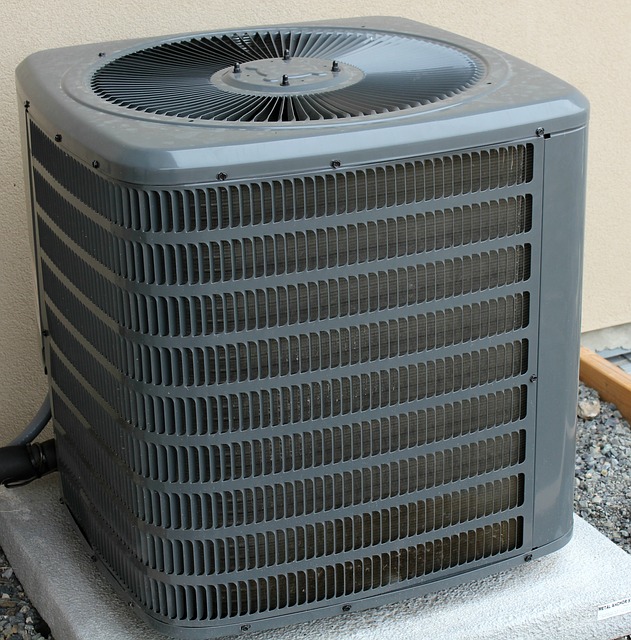
2. Clean Around Your Outdoor Air Conditioner

Take a walk outside and look at your air conditioning condenser.
Is it surrounded by weeds, grass clippings, leaves, or overgrown shrubs?
Your outdoor unit needs plenty of airflow to release heat from your home. Anything blocking the condenser reduces efficiency and forces your system to work harder.
Clear away:
- Grass
- Weeds
- Leaves
- Mulch piled against the unit
- Tree branches
- Outdoor decorations
Aim to maintain at least two feet of open space around the condenser.
If the coil looks dirty, gently rinse it with a garden hose after shutting off power to the unit. Never use a pressure washer because it can bend the delicate aluminum fins.
Helpful Tip: If you haven’t already, be sure to read our guide on HVAC Tips for Homeowners in the Summer for more ways to keep your cooling system running efficiently all season long.
3. Test Your Lawn Sprinkler or Irrigation System
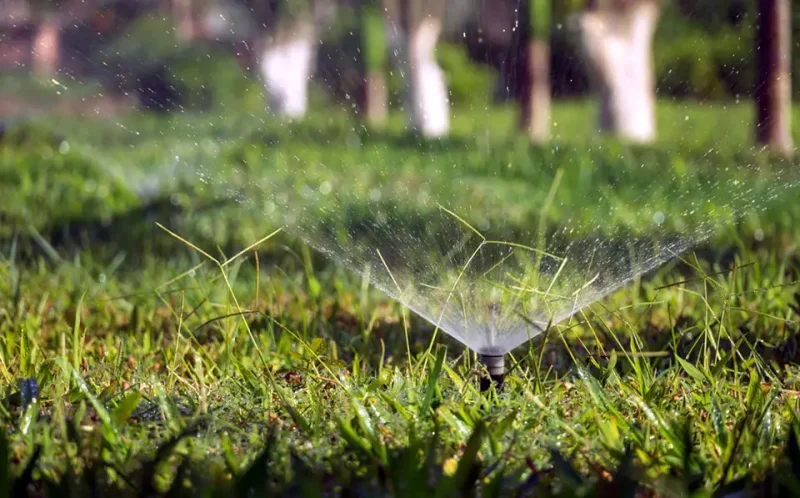
Before temperatures climb even higher, run each irrigation zone for a few minutes.
Look for:
- Broken sprinkler heads
- Water spraying onto sidewalks
- Leaking fittings
- Dry patches of lawn
- Overspray hitting your house
A simple adjustment now can save water and help keep your lawn healthy during hot weather.
4. Inspect Your Roof—Safely
Summer storms can expose roofing problems that developed during the winter.
You don’t need to climb onto the roof.
Instead, walk around your property with a pair of binoculars and look for:
- Missing shingles
- Curling shingles
- Loose flashing
- Damaged vents
- Sagging areas
- Debris collecting in roof valleys
Catching problems early often prevents much more expensive water damage later.


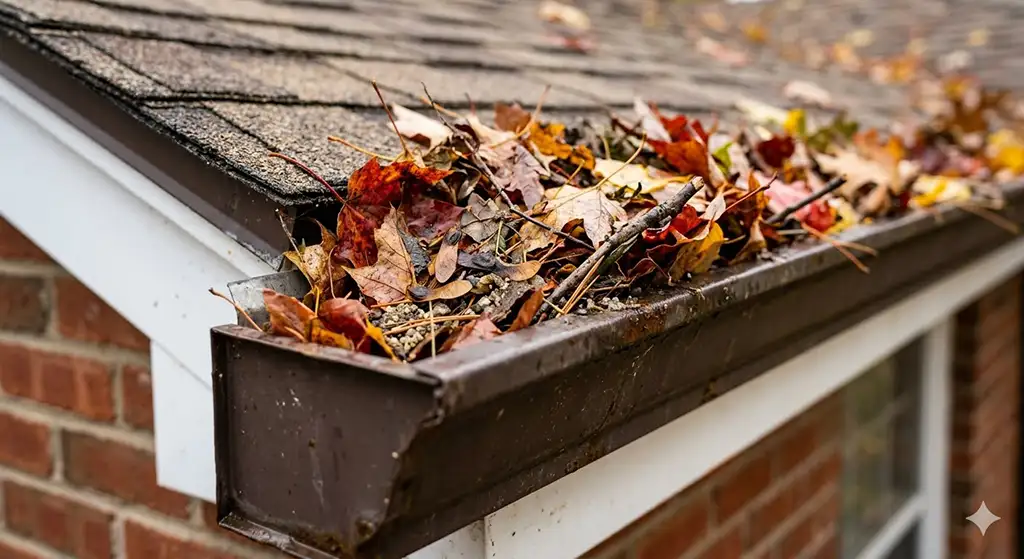
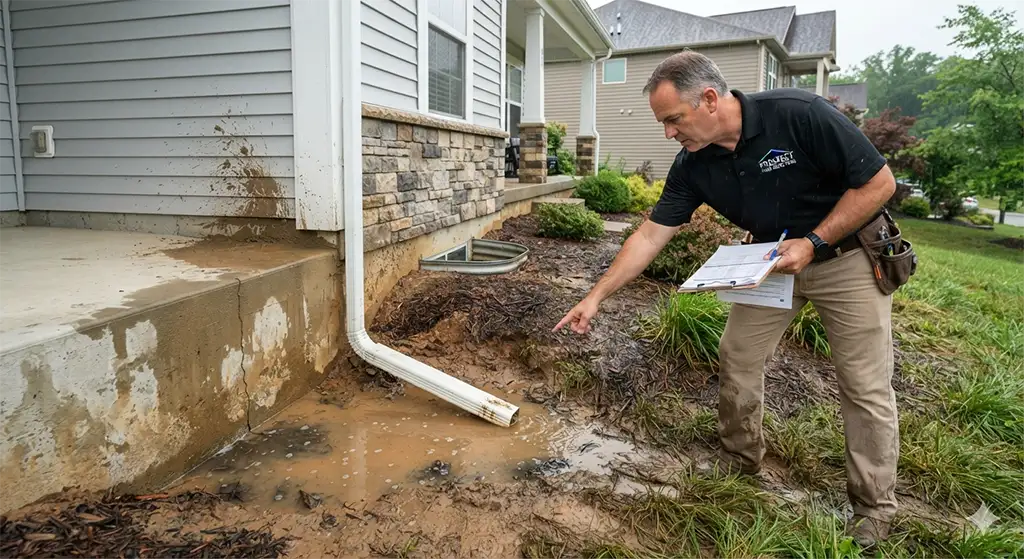
5. Clean Your Gutters and Downspouts
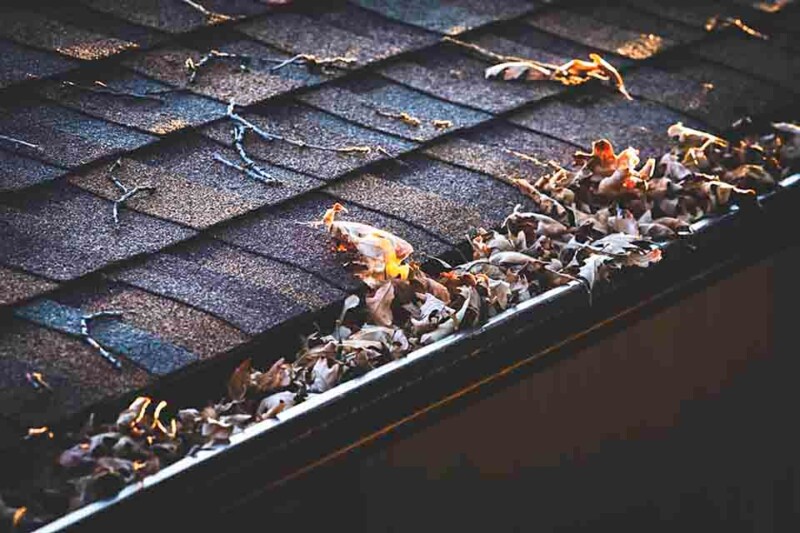
Many homeowners associate gutter cleaning with autumn, but summer is just as important.
Heavy thunderstorms can dump several inches of rain in a short period.
If gutters are clogged, water can overflow and damage:
- Fascia boards
- Siding
- Landscaping
- Foundations
- Basements
After cleaning the gutters, flush each downspout with a garden hose to confirm water flows freely away from your home.
6. Check Windows and Doors for Air Leaks
Your air conditioner works hard enough without cool air escaping outside.
Inspect around:
- Windows
- Exterior doors
- Sliding patio doors
- Garage entry doors
Look for cracked caulk, worn weatherstripping, or visible gaps.
Replacing weatherstripping is one of the least expensive home improvement projects you’ll ever complete, yet it can noticeably improve comfort while reducing cooling costs.
7. Inspect Your Deck or Patio
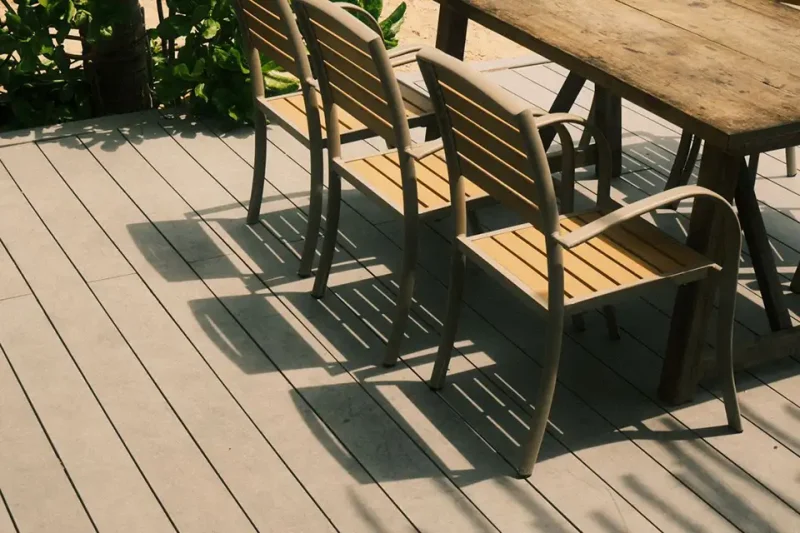
Summer means more time outdoors.
Before inviting family and friends over, inspect your deck carefully.
Check for:
- Loose boards
- Popped nails
- Loose railings
- Rotting wood
- Splintered surfaces
If your deck is due for cleaning or staining, early summer is often the perfect time before prolonged periods of intense sun.
Don’t forget to inspect patios for cracked pavers or uneven surfaces that could become tripping hazards.
8. Wash Your Home’s Exterior
Over the past year, dirt, pollen, mildew, and algae may have built up on your home’s siding.
Cleaning the exterior instantly improves curb appeal.
Use:
- A garden hose
- Soft brush
- Mild cleaning solution
Pressure washers can be helpful, but use caution around vinyl siding and older painted surfaces.
Sometimes a gentle wash is all that’s needed to make your home look years newer.
9. Trim Trees and Shrubs
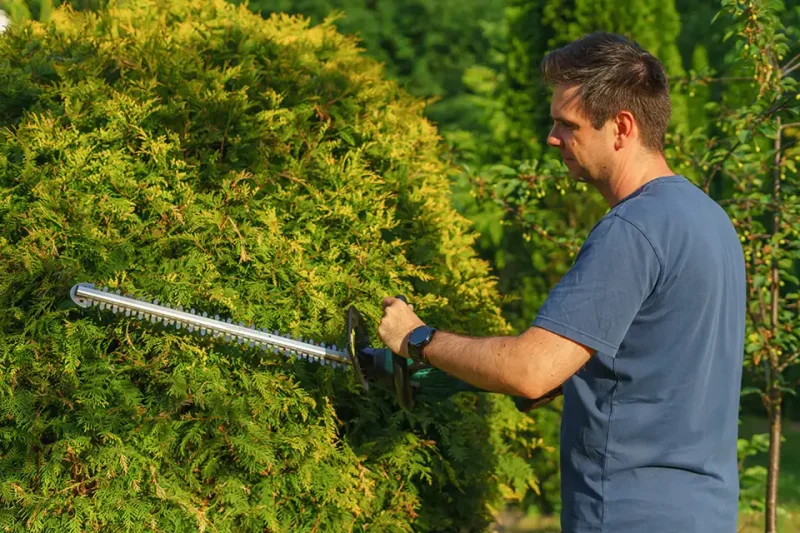
Summer storms and high winds can turn overgrown branches into expensive problems.
Trim back vegetation touching:
- Roofs
- Gutters
- Siding
- Windows
- Air conditioning equipment
Keeping branches away from your house also discourages insects and rodents from finding easy pathways inside.


10. Clean Outdoor Furniture
Outdoor furniture spends months exposed to rain, pollen, bird droppings, and dust.
Wash:
- Patio chairs
- Tables
- Umbrellas
- Cushions
While cleaning, inspect furniture for rust, loose hardware, or torn fabric.
A little maintenance now helps your outdoor living space stay comfortable all season.
11. Test Smoke and Carbon Monoxide Detectors
Summer often means vacations.
Before leaving home for any extended trip, test every smoke detector and carbon monoxide alarm.
Replace batteries if needed.
Even detectors with ten-year batteries should be tested monthly using the test button.
These devices are inexpensive, but they provide priceless protection for your family.
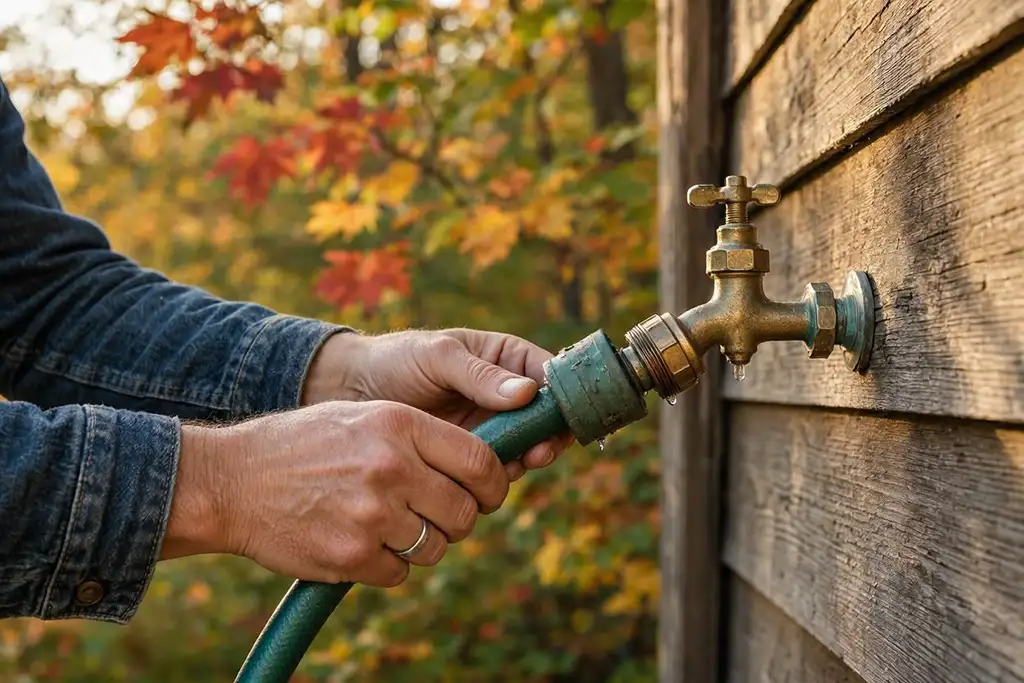
12. Inspect Garden Hoses and Outdoor Faucets
Small leaks may not seem like a big deal, but a dripping hose connection can waste a surprising amount of water over the course of a summer.
Inspect:
- Hose bibs
- Hose washers
- Spray nozzles
- Garden hoses
- Outdoor spigots
Replace cracked washers or damaged hoses before they become larger leaks.
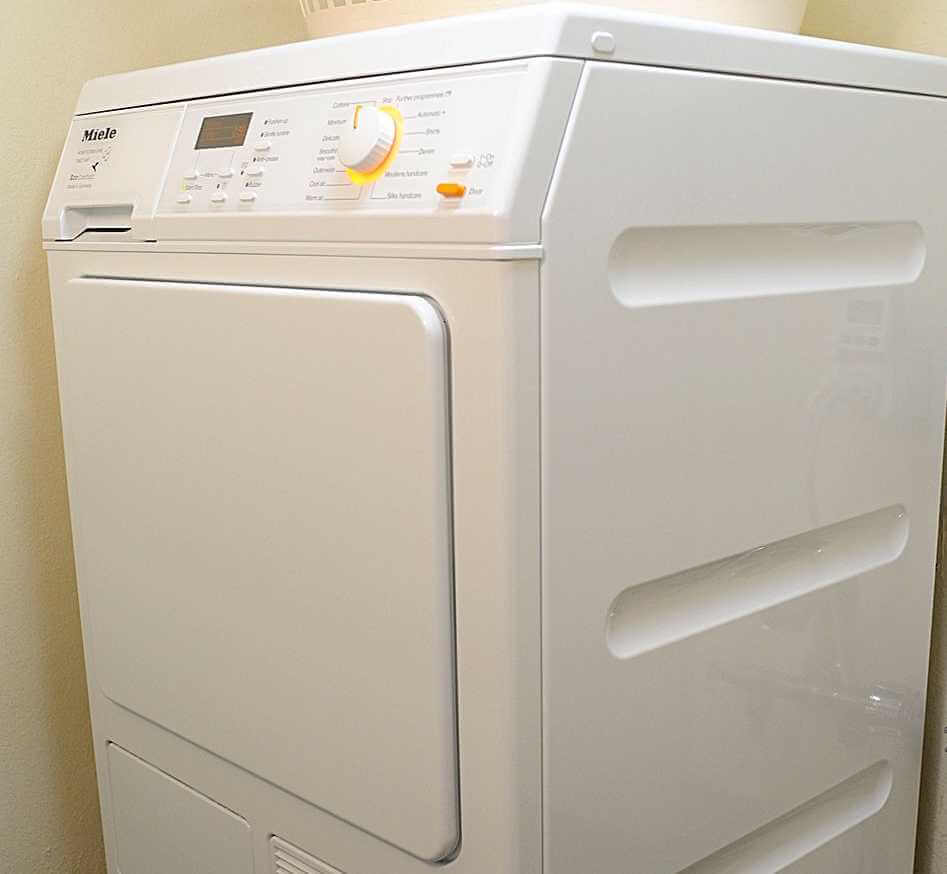
13. Clean Your Dryer Vent
Many homeowners remember to clean the lint trap after every load of laundry, but the dryer vent itself is often forgotten.
Over time, lint builds up inside the vent pipe, reducing airflow and forcing your dryer to work harder. Not only does this increase drying times and energy costs, but excessive lint buildup is also a potential fire hazard.
At least once a year:
- Disconnect the dryer (following the manufacturer’s instructions).
- Vacuum lint from the vent connection.
- Clean the vent pipe leading outdoors.
- Make sure the exterior vent flap opens and closes freely.
If your clothes are taking longer than normal to dry, a clogged vent may be the reason.
14. Set Your Ceiling Fans for Summer
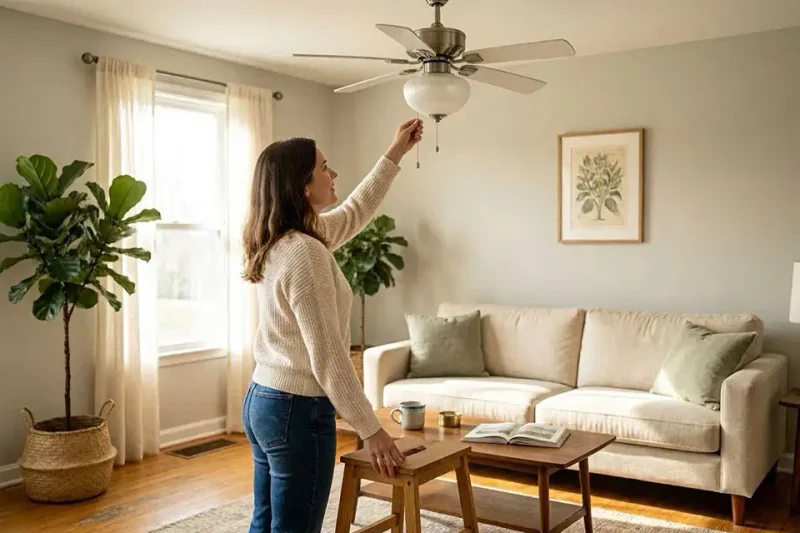
Believe it or not, the direction your ceiling fan spins makes a difference.
During the summer, your fan should rotate counterclockwise. This creates a downward breeze that makes you feel cooler without actually lowering the room temperature.
Many homeowners can comfortably raise the thermostat by a couple of degrees while using ceiling fans, helping reduce cooling costs.
Remember: Ceiling fans cool people, not rooms. Turn them off when you leave the room to save electricity.
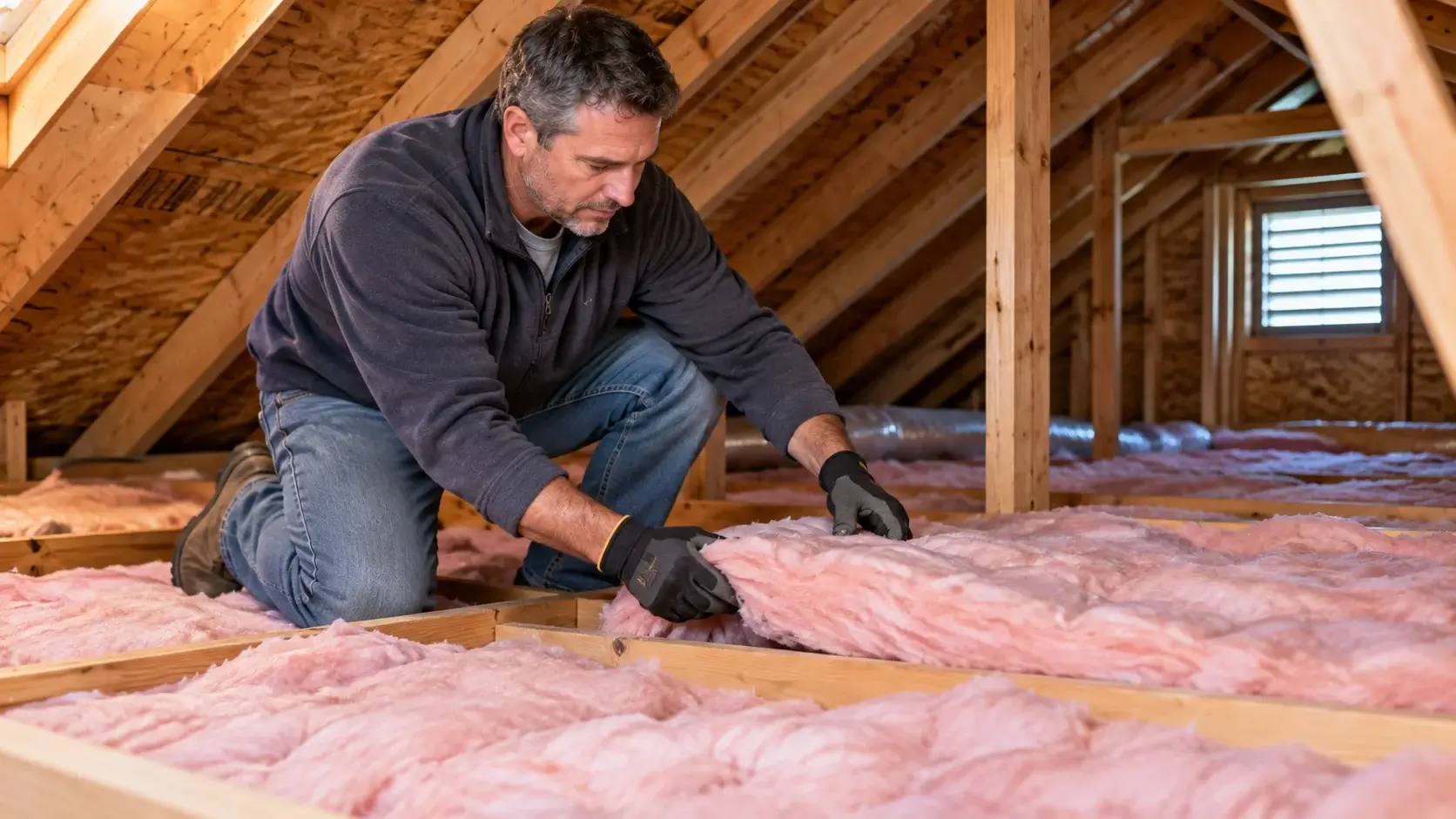
15. Check Your Attic Ventilation
Your attic can easily reach temperatures of 130°F or more during the summer.
Without proper ventilation, that trapped heat transfers into your living space, making your air conditioner work much harder.
While you’re in the attic, look for:
- Blocked soffit vents
- Damaged roof vents
- Signs of moisture
- Wet insulation
- Mold or mildew
- Evidence of pests
A well-ventilated attic helps improve comfort and can extend the life of your roofing materials.
16. Seal Small Cracks in Your Driveway
Small cracks in concrete or asphalt often become larger problems after repeated exposure to rain, heat, and winter freezing.
Walk your driveway and look for:
- Hairline cracks
- Crumbling edges
- Low spots where water collects
Repairing minor cracks now is much less expensive than replacing an entire section later.
17. Inspect Fences and Gates

Summer is hard on wooden fences.
Check for:
- Loose fence posts
- Missing screws or nails
- Broken pickets
- Sagging gates
- Rusty hinges
A few simple repairs now can help your fence survive another season of storms and high winds.
18. Pressure Wash Walkways and Patios
Concrete, brick, and paver surfaces collect dirt, algae, pollen, and mildew over time.
Cleaning them improves your home’s appearance and reduces slippery surfaces that could become a safety hazard.
Use caution with pressure washers, especially around decorative stone, older concrete, and mortar joints. Sometimes a stiff brush and garden hose provide all the cleaning power you need.
19. Check Outdoor Lighting
Long summer evenings often mean spending more time outside.
Walk around your property after sunset and inspect:
- Porch lights
- Garage lights
- Landscape lighting
- Motion lights
- Pathway lights
Replace burned-out bulbs and clean dirty fixtures.
Well-lit walkways improve both safety and security.


20. Inspect Exterior Caulking
Caulk doesn’t last forever.
Over time it dries out, shrinks, or cracks, allowing water and insects to enter your home.
Inspect the caulking around:
- Windows
- Doors
- Utility pipes
- Exterior vents
- Siding joints
Replacing damaged caulk is one of the simplest ways to prevent moisture problems before they start.
21. Clean Window Screens

Spring pollen and summer dust can quickly coat window screens.
Remove them carefully and rinse with a garden hose.
For stubborn dirt, use a soft brush and mild soap.
While cleaning, inspect for:
- Torn screens
- Bent frames
- Loose corners
Repairing small tears now keeps insects outside where they belong.
22. Test Outdoor GFCI Outlets
Many outdoor electrical outlets are protected by Ground Fault Circuit Interrupters (GFCIs).
These safety devices help prevent electrical shock around water.
Press the TEST button.
The outlet should immediately lose power.
Then press RESET to restore power.
If the outlet doesn’t respond correctly, it should be inspected or replaced before continued use.
23. Eliminate Standing Water
Summer also means mosquito season.
Walk around your yard looking for places where water collects, including:
- Flower pots
- Children’s toys
- Buckets
- Bird baths
- Wheelbarrows
- Old tires
- Clogged gutters
Even small amounts of standing water can become mosquito breeding grounds within days.
24. Prepare for Summer Storms

Thunderstorms can develop quickly during the summer months.
Take a few minutes to prepare before severe weather arrives.
Secure or store:
- Patio umbrellas
- Outdoor cushions
- Grills
- Lawn decorations
- Trash cans
If you own a portable generator, make sure it’s ready to use and always operate it outdoors, well away from doors and windows.
25. Take One Final Walk Around Your Home
After completing this checklist, spend ten minutes simply walking around your property.
Look carefully.
Ask yourself:
- Does anything look different than last summer?
- Are there new cracks?
- Loose siding?
- Water stains?
- Dead tree limbs?
- Damaged landscaping?
- Insect activity?
Sometimes slowing down and looking closely is the best maintenance task of all.
Many costly home repairs begin as small problems that homeowners simply don’t notice.
Frequently Asked Questions
How often should I complete a summer home maintenance checklist?
Once each year is a good starting point. Many homeowners complete these tasks in late spring or early summer before temperatures become extremely hot. Certain items, like checking HVAC filters and mowing the lawn, should be performed more frequently throughout the season.
What summer maintenance task is the most important?
If you only have time for one project, inspect your HVAC system. A clean air filter and unobstructed outdoor condenser can improve efficiency, lower energy bills, and help prevent an inconvenient breakdown during a heat wave.
Can I complete most of these projects myself?
Yes. Nearly every task in this checklist is DIY-friendly and requires only basic household tools. However, roof repairs, electrical work beyond simple testing, and major HVAC repairs should be left to qualified professionals.
Why is seasonal home maintenance important?
Regular maintenance helps catch small problems before they become major repairs. It can also improve your home’s energy efficiency, extend the life of important systems, and help maintain your property’s value.
Should I hire a professional for a home inspection?
If you’re unsure about the condition of your roof, HVAC system, electrical system, or foundation, hiring a qualified professional can provide peace of mind and identify issues that may not be obvious during a visual inspection.
Final Thoughts on Essential Summer Home Maintenance
Your home is one of the biggest investments you’ll ever make, and like any investment, it requires regular care.
The good news is that maintaining your home doesn’t have to be overwhelming. By working through this checklist one task at a time, you can prevent many common problems before they become expensive repairs. Most of these projects require only a few basic tools and a little time, yet they can improve your home’s comfort, safety, efficiency, and curb appeal throughout the summer.
Remember, home maintenance isn’t about perfection—it’s about being proactive. A few hours spent inspecting your home today can save you hundreds or even thousands of dollars in unexpected repairs tomorrow.
Bookmark this checklist, tackle a few items each weekend, and enjoy the peace of mind that comes from knowing your home is ready for everything summer has in store.


Need Help Completing These Summer Maintenance Tasks?
Some projects are perfect for DIY homeowners, while others are safer or more efficient when handled by a professional.
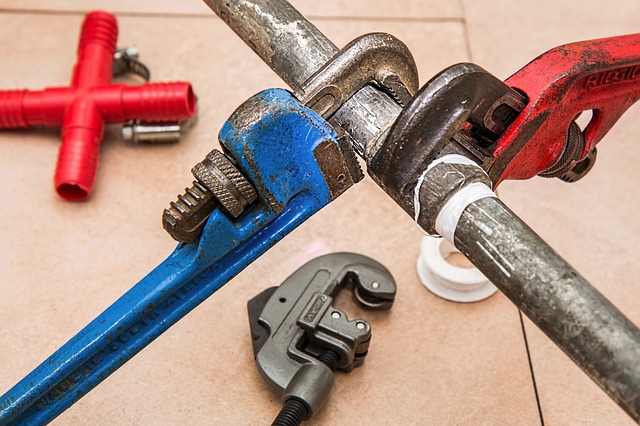
Whether you need an HVAC technician, roofer, electrician, plumber, landscaper, or handyman, the HelpHouse Contractor Directory makes it easy to find qualified professionals for your next home project.
Before You Go…
Looking for more seasonal home care advice? Don’t miss our article on HVAC Tips for Homeowners in the Summer, where you’ll learn simple ways to keep your air conditioner running efficiently, improve indoor comfort, and reduce cooling costs during the hottest months of the year.
Related Summer Homeowner Guides
- ✅ Summer Home Maintenance Checklist: 25 Simple Tasks Every Homeowner Should Complete
- HVAC Tips for Homeowners in the Summer
- How to Keep Your House Cool Without Turning Down the Thermostat
- Why Is My Upstairs Always Hot in the Summer?
- Best Thermostat Settings for Summer
- Summer Energy Saving Tips That Actually Work
Getting Your Home Ready for Fall
Summer may be winding down, but your home still has plenty of maintenance needs before colder weather arrives. Fall is the perfect time to prepare your home for winter, take care of small repairs, and make sure your heating and plumbing systems are ready for the months ahead.
Coming Soon: Fall Home Maintenance
We’re expanding our seasonal home maintenance guides to help homeowners prepare for the changing weather. Start with our newly updated:
🍂 [Fall Home Maintenance Checklist: 25 Essential Tasks Every Homeowner Should Complete]
And watch for more HelpHouse guides covering:
- How to Prepare Your Home for Colder Weather
- When Should You Clean Your Gutters?
- How to Winterize Outdoor Faucets Before Freezing Weather
- How to Prepare Your Furnace for Winter
- Fall Roof Inspection Checklist for Homeowners
- How to Seal Drafty Windows and Doors Before Winter
A little preparation now can help prevent expensive problems later.
Are you a contractor?
Help homeowners find your business by listing your company in the HelpHouse Contractor Directory.