Your gutters probably aren’t something you think about very often—until they’re overflowing during a heavy rainstorm.
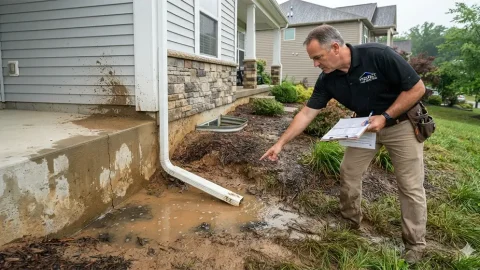
Gutters and downspouts have a simple but important job: they collect rainwater from your roof and direct it away from your home’s siding, foundation, landscaping, and other vulnerable areas. When leaves and debris build up, that water may not have anywhere to go.
So when should you clean your gutters?
For most homeowners, fall is one of the most important times to clean gutters, particularly after most of the leaves have fallen. However, there isn’t one perfect date for every house. The right timing depends on how many trees surround your home, your local weather, the type of gutter system you have, and how quickly debris accumulates.
In this guide, we’ll explain when to clean your gutters, how often to check them, what problems clogged gutters can cause, and how to decide whether this is a reasonable DIY project or a job better left to a professional.
Originally published September 22, 2023 | Updated August 2026
This guide has been completely updated to help homeowners understand when to clean their gutters, how often they may need attention, what warning signs to look for, and when professional help makes sense.
Quick Gutter Cleaning Checklist
Before winter arrives, make sure you:
☐ Check gutters for leaves and debris
☐ Inspect gutters for sagging or loose sections
☐ Clear clogged downspouts
☐ Check that downspouts direct water away from the foundation
☐ Look for leaks or damaged seams
☐ Check for standing water
☐ Inspect gutter hangers and fasteners
☐ Look for excessive debris on the roof
☐ Recheck gutters after major leaf drop
☐ Decide whether professional cleaning is needed
When Is the Best Time to Clean Your Gutters?
For many homeowners, late fall is the best time for a thorough gutter cleaning, after most leaves have fallen but before freezing temperatures and winter weather become a regular occurrence.
However, waiting until every leaf has fallen isn’t always practical.
If your home is surrounded by mature trees, your gutters may become clogged well before the end of autumn. In that situation, cleaning them once in early or mid-fall and checking them again later may be more effective than trying to do everything at once.
A simple rule to remember:
Clean your gutters when they become clogged—not simply because the calendar says it’s fall.
If you can see leaves and debris accumulating or water isn’t flowing properly during rain, it’s time to take a closer look.
Why Fall Is Such an Important Time for Gutter Cleaning
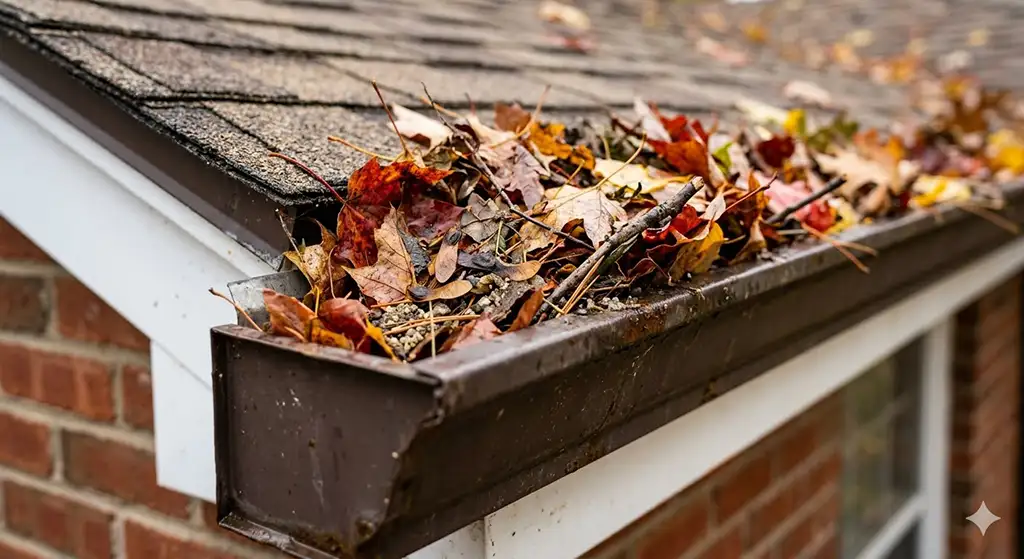
Fall creates the perfect conditions for clogged gutters.
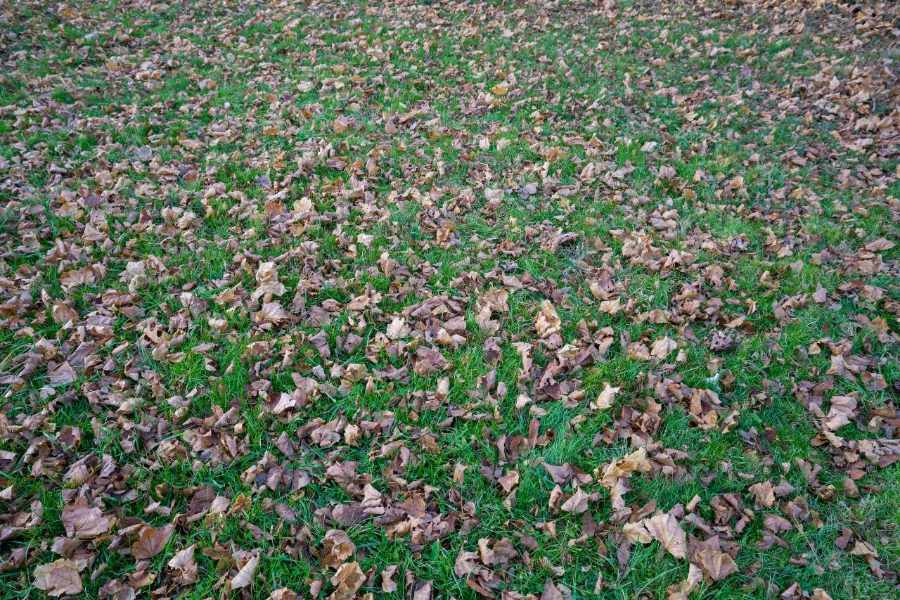
Trees shed leaves, pine needles, seeds, twigs, and other debris, and much of it eventually ends up on your roof. Rain then washes that material into the gutters.
A gutter that was perfectly clean in September can be substantially clogged a few weeks later.
That matters because autumn is also a season when many areas experience significant rainfall. Your gutters need to be able to move that water away from your house.
Cleaning them before winter helps you start the colder season with a functioning drainage system.
How Often Should You Clean Your Gutters?
There isn’t a universal schedule that works for every house.
A home surrounded by tall trees may need gutter cleaning several times a year, while a house with few nearby trees may require much less frequent attention.
As a starting point, many homeowners should inspect their gutters at least twice a year, particularly in spring and fall.
You may need to check them more frequently if:
- Your property has many mature trees.
- You have pine trees near the house.
- Leaves accumulate quickly on your roof.
- Your gutters overflow during rain.
- Your home has a history of clogged downspouts.
- You don’t have gutter guards.
- Your gutter guards allow significant debris through.
Rather than relying exclusively on a calendar, pay attention to what is happening around your home.
How Do You Know Your Gutters Need Cleaning?
Sometimes you don’t have to climb a ladder to know there’s a problem.
Watch for these warning signs:
Water Overflowing During Rain
If water pours over the front or sides of your gutters instead of flowing through the system, there may be a blockage.
However, overflowing gutters can also indicate other problems, including improperly pitched gutters or inadequate capacity, so don’t automatically assume debris is the only cause.
Leaves and Debris Are Visible
If you can see a thick layer of leaves sitting inside your gutters, they’re worth inspecting.
Don’t wait until the material becomes completely compacted.
Plants Are Growing in the Gutters
This is a pretty obvious sign that your gutters have been neglected.
Seeds and organic material can accumulate and eventually create enough soil for weeds or other plants to grow.
Sagging Gutters
A gutter filled with wet leaves and water can become surprisingly heavy.
If sections of your gutter are sagging or pulling away from the house, the problem needs attention.
Water Stains on Exterior Walls
Staining below the roofline or around gutters can indicate that water isn’t draining properly.
Downspouts Aren’t Draining
If water backs up or doesn’t come out of the bottom of a downspout during rain, there may be a blockage.
Don’t Forget the Downspouts
Cleaning the horizontal gutter itself isn’t enough.
Downspouts are what carry the collected water away from your roof and toward the ground.
A clogged downspout can cause water to back up into the gutter, potentially resulting in overflow.
After cleaning your gutters, check the downspouts for blockages and make sure water can move freely through them.
Also check where the water exits.
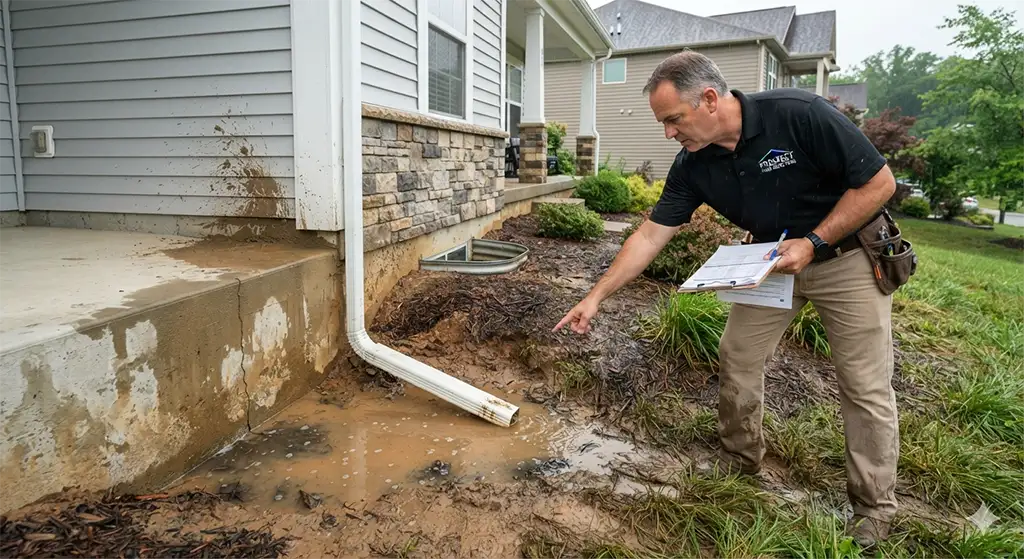
Downspouts should direct water sufficiently away from your home’s foundation rather than dumping large amounts of water directly against the house.
What Happens If You Don’t Clean Your Gutters?
Ignoring clogged gutters can create problems beyond an ugly pile of leaves.
Potential consequences include:
Roof Problems
Standing water and poorly drained rainwater can contribute to moisture problems around the roof and gutter system.
Siding Damage
Overflowing water can repeatedly run down exterior walls, potentially staining or damaging siding and trim.
Foundation Problems
Water discharged too close to the foundation can contribute to drainage and moisture problems.
Landscape Erosion
Concentrated water can wash away soil and mulch around your home.
Ice-Related Problems
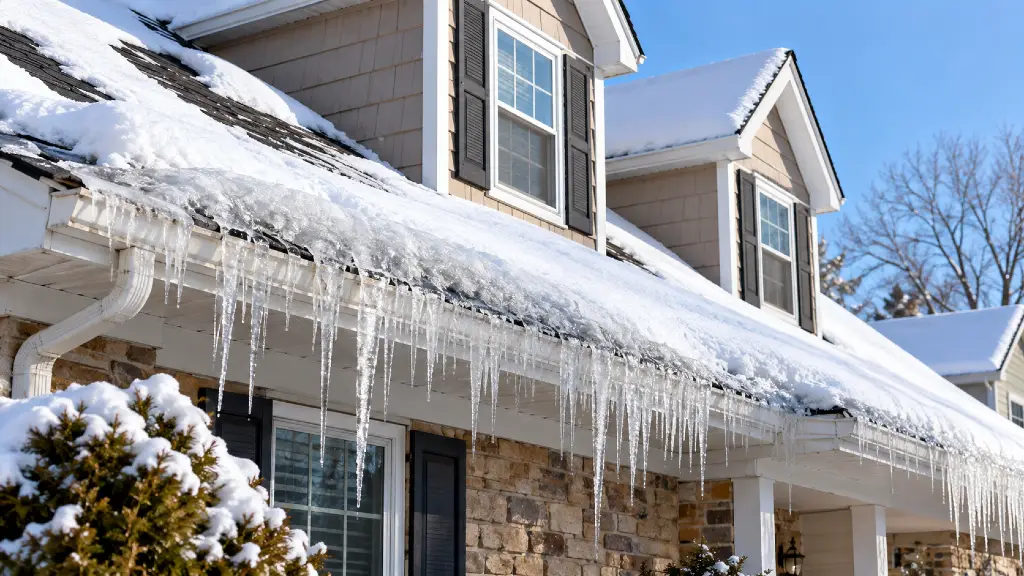
In colder climates, trapped water and winter freezing can create additional problems for gutters and roofing systems.
Pest Problems
Accumulated organic debris can provide a damp environment that may attract insects and other unwanted visitors.
None of these problems necessarily occurs simply because you missed one gutter cleaning. The concern is repeated or prolonged poor drainage.
Should You Clean Gutters Before or After the Leaves Fall?
This is one of the most common questions homeowners ask.
The answer is: usually both can make sense.
If your gutters are already filling with leaves in early fall, clean them before they become heavily clogged.
Then, after most leaves have fallen, inspect them again.
For a heavily wooded property, two cleanings may be much more practical than trying to find one “perfect” day.
A practical fall schedule
Early fall: Check gutters and remove obvious buildup.
Late fall: Clean them again after most leaves have fallen.
After major storms: Check for branches and debris.
This approach is particularly useful if you live beneath large deciduous trees.
Can You Clean Your Gutters Yourself?
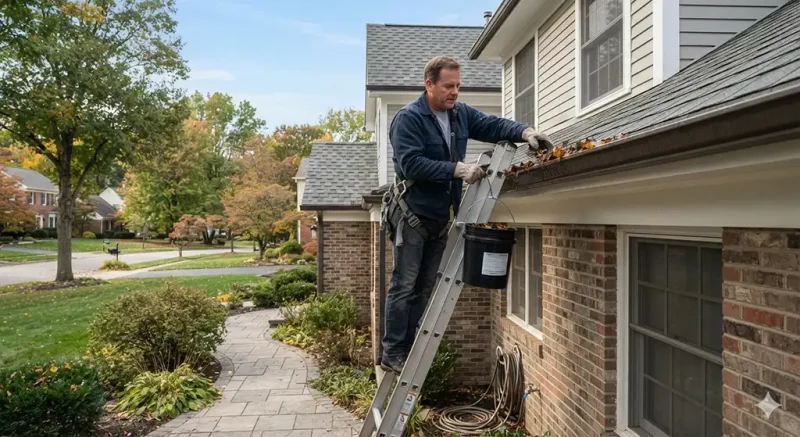
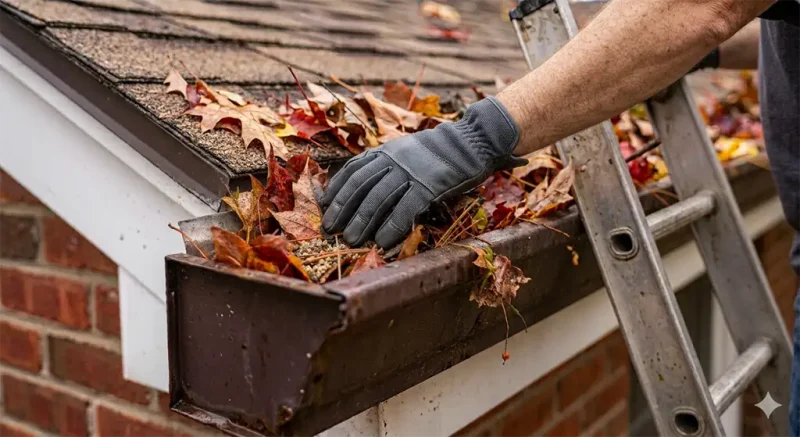
For some homeowners, gutter cleaning is a manageable DIY maintenance task.
If you have a single-story home, accessible gutters, stable ground, and the right equipment, you may be comfortable handling basic cleaning yourself.
Typical tools include:
- Work gloves
- Gutter scoop or small hand tool
- Bucket or debris bag
- Garden hose
- Stable ladder when appropriate
Remove accumulated debris and then check that water can flow freely through the gutters and downspouts.
But don’t underestimate the safety issue.
Gutter cleaning often involves working from a ladder several feet above the ground. Wet leaves, uneven ground, power lines, steep roofs, and awkward positioning can make the job dangerous.
If you’re uncomfortable on a ladder, don’t do it yourself.
Hiring someone to clean your gutters is considerably cheaper than dealing with an injury.
When Should You Hire a Professional Gutter Cleaner?
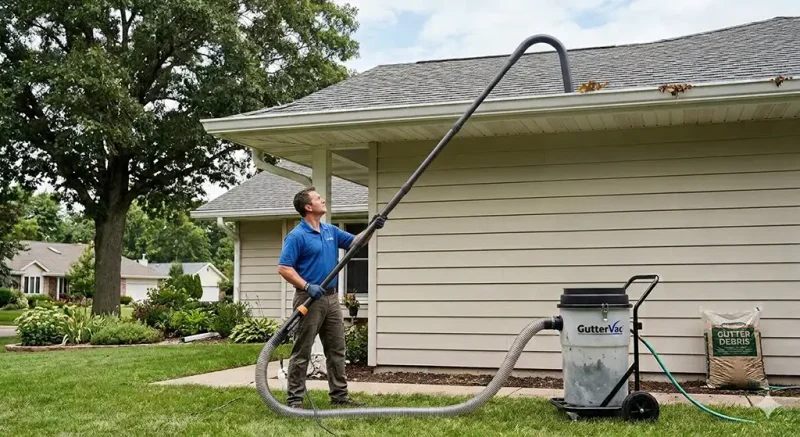
Professional help makes sense when the job is difficult, dangerous, or beyond your comfort level.
Consider hiring a professional if:
- Your home is more than one story.
- Gutters are difficult to reach.
- The roof is steep.
- Trees have deposited large amounts of debris.
- Gutters are pulling away from the house.
- You discover damaged or leaking sections.
- Downspouts are severely clogged.
- You’re uncomfortable using a ladder.
- Power lines are near the work area.
A professional can also identify problems you might overlook, such as loose gutter hangers, damaged seams, poor drainage, or sections that aren’t properly pitched.


What About Gutter Guards?
Gutter guards can reduce the amount of leaves and larger debris that enter a gutter system, but they don’t make gutters maintenance-free.
Different types of guards perform differently, and small debris such as seeds, pine needles, and roof granules may still accumulate.
If your home has gutter guards, inspect them periodically and follow the manufacturer’s maintenance recommendations.
Don’t assume that because you installed gutter guards, you never need to look at your gutters again.
What Should You Look for While Cleaning Your Gutters?
Gutter cleaning is also an opportunity to inspect the system.
Look for:
Loose or Sagging Sections
Gutters should remain securely attached to the home.
Cracks and Holes
Small leaks may become more noticeable during heavy rain.
Damaged Seams
Look closely at connections between gutter sections.
Loose Downspouts
Make sure downspouts remain securely connected and direct water where it belongs.
Standing Water
Water that remains in a gutter after rain may indicate a drainage or slope problem.
Rust or Corrosion
Older metal gutters may eventually deteriorate and require repair or replacement.
If you discover significant damage, cleaning the gutter isn’t necessarily enough. The underlying problem should be addressed.
What About Gutter Cleaning in the Spring?
Fall gets most of the attention, but spring is also an important time to inspect your gutters.
Winter storms can deposit branches and debris, while spring pollen, seeds, and other material can create new blockages.
A good seasonal routine is:
Spring: Inspect and clean after winter.
Fall: Clean and inspect after significant leaf drop.
Anytime: Check the system after major storms or when you notice drainage problems.
This simple routine can help you catch problems before they become emergencies.
How to Make Gutter Cleaning Easier
A few habits can make seasonal gutter maintenance much less of a chore.
Keep Nearby Trees Trimmed
Proper tree maintenance can reduce the amount of debris falling directly onto your roof.
Don’t attempt to remove large branches yourself if doing so would require climbing or working near power lines.
Check Gutters After Major Storms
A quick visual inspection can reveal branches or debris before they create a blockage.
Don’t Ignore Small Problems
A loose section or minor leak is easier to address before it becomes a larger drainage problem.
Keep Downspouts Clear
A clean gutter doesn’t help much if the downspout is blocked.
A Simple Fall Gutter Cleaning Routine
If you’re doing the work yourself, think of gutter cleaning as a clean, inspect, test process.
1. Clean
Remove leaves, sticks, and other accumulated debris.
2. Inspect
Look for loose, damaged, sagging, or leaking sections.
3. Clear
Make sure downspouts aren’t blocked.
4. Test
Use water to verify that the system is draining properly, where practical and safe.
5. Redirect
Make sure downspouts discharge water away from your home’s foundation.
6. Recheck
After additional leaves fall or after a major storm, take another look.
Frequently Asked Questions
When is the best month to clean gutters?
There isn’t one perfect month for every location. In many areas, late fall is a good time because most leaves have fallen but freezing weather hasn’t fully arrived. Homes surrounded by trees may need an earlier cleaning and another check later in the season.
How often should I clean my gutters?
Many homeowners should inspect and clean their gutters at least twice a year, typically in spring and fall. Homes surrounded by mature trees may need more frequent attention.
There isn’t one perfect month for every location. In many areas, late fall is a good time because most leaves have fallen but freezing weather hasn’t fully arrived. Homes surrounded by trees may need an earlier cleaning and another check later in the season.
Many homeowners should inspect and clean their gutters at least twice a year, typically in spring and fall. Homes surrounded by mature trees may need more frequent attention.
Clogged gutters can interfere with proper drainage and contribute to moisture-related problems around the roof and gutter system. If you notice persistent overflow or standing water, investigate the cause rather than ignoring it.
No. Gutter guards can reduce debris entering gutters, but they don’t eliminate maintenance. Small debris can accumulate on or beneath some types of guards, so the system should still be inspected periodically.
There are tools designed for ground-level gutter cleaning, but their effectiveness varies depending on your home’s height and gutter configuration. If the gutters can’t be safely reached, hiring a professional is usually the better option.
Yes. Even homes without large trees can accumulate roof debris, seeds, dirt, and other material in gutters. At minimum, inspect them periodically to make sure they’re draining properly.
Final Thoughts
So, when should you clean your gutters?
For most homeowners, fall is one of the most important times to do it—particularly after most of the leaves have fallen and before freezing weather becomes a regular problem.
But don’t get too focused on a particular date. Your home’s surroundings are a better guide. If you live beneath large trees, your gutters may need attention several times during the season. If you have few nearby trees, you may need considerably less maintenance.
The most important thing is to keep water moving where it’s supposed to go.
A few minutes spent checking your gutters can help you catch clogs, leaks, loose sections, and drainage problems before they turn into bigger headaches.
And if cleaning your gutters requires climbing onto a high roof or working from an uncomfortable ladder, remember that hiring a professional isn’t giving up on DIY home maintenance. It’s making a smart decision about safety.
Need Help Cleaning or Repairing Your Gutters?
If your gutters are difficult to reach, heavily clogged, damaged, or pulling away from your home, a professional can handle the job safely and identify problems that may need repair.
Find gutter cleaning, roofing, and exterior maintenance professionals in the HelpHouse Contractor Directory.
More Fall Home Maintenance Help
Continue preparing your home for the colder months with:
Fall Home Maintenance Checklist: 25 Essential Tasks Every Homeowner Should Complete
How to Prepare Your Home for Colder Weather: 15 Things to Do Before Winter
Fall Roof Inspection Checklist: 10 Things Homeowners Should Check Before Winter
How to Winterize Outdoor Faucets Before Freezing Weather
How to Seal Drafty Windows and Doors Before Winter
Coming Soon
- How to Prepare Your Furnace Before Cold Weather
- How to Prevent Frozen Pipes This Winter
Are you a contractor?
Help homeowners find your business by listing your company in the HelpHouse Contractor Directory.