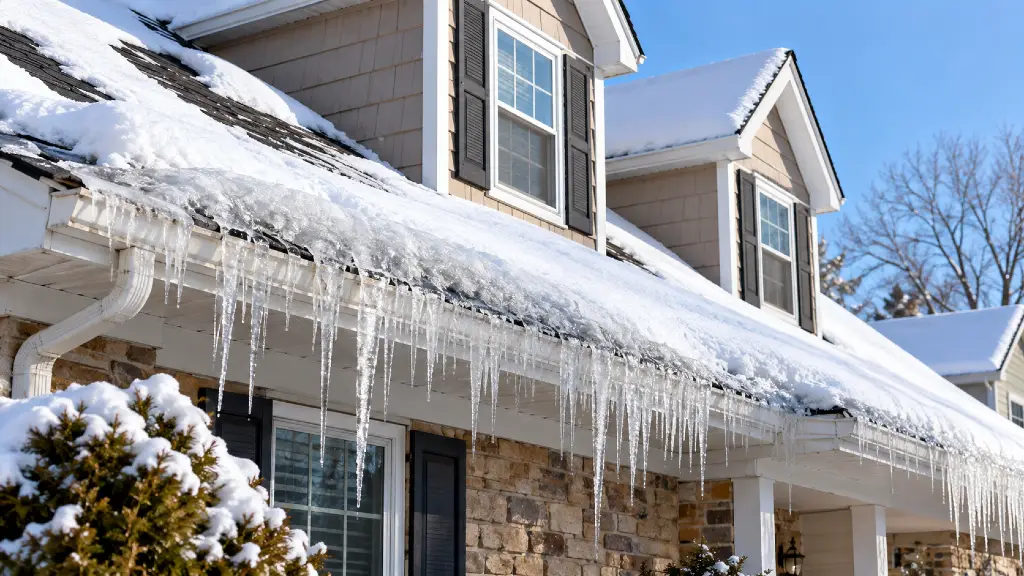
Ice dams can be one of the most frustrating winter problems a homeowner can encounter.
They often begin when snow on a roof melts because of heat escaping from the house. The water runs down the roof toward the colder eaves, where it can refreeze and form a ridge of ice.
As the ice builds up, additional melting water can become trapped behind it. That water may eventually work its way beneath roofing materials and into the home, potentially causing damage to the roof, attic, insulation, ceilings, walls, and other parts of the house.
The good news is that many ice-dam problems can be reduced by addressing the conditions that cause uneven roof temperatures before winter arrives.
Here’s what homeowners should know about ice dams and how to help prevent them.
What Causes Ice Dams?
Ice dams are generally associated with uneven roof temperatures.
A common scenario looks like this:
- Heat escapes from the living space into the attic.
- That heat warms portions of the roof deck.
- Snow on the warmer portion of the roof begins to melt.
- Meltwater flows toward the colder roof edge.
- The water freezes when it reaches the colder section.
- Additional meltwater can collect behind the ice.
Poor attic insulation and air leakage can contribute to this temperature difference.
ENERGY STAR identifies ice dams as a common symptom of attic insulation and air-sealing problems.
However, ice dams aren’t caused by one problem in every house. Roof design, weather conditions, snow accumulation, insulation, air leakage, ventilation, and other factors can all play a role.
How to Prevent Ice Dams Before Winter
The best time to address ice-dam problems is before snow and freezing temperatures arrive.
You don’t want to discover an attic ventilation problem or inadequate insulation in the middle of a winter storm.
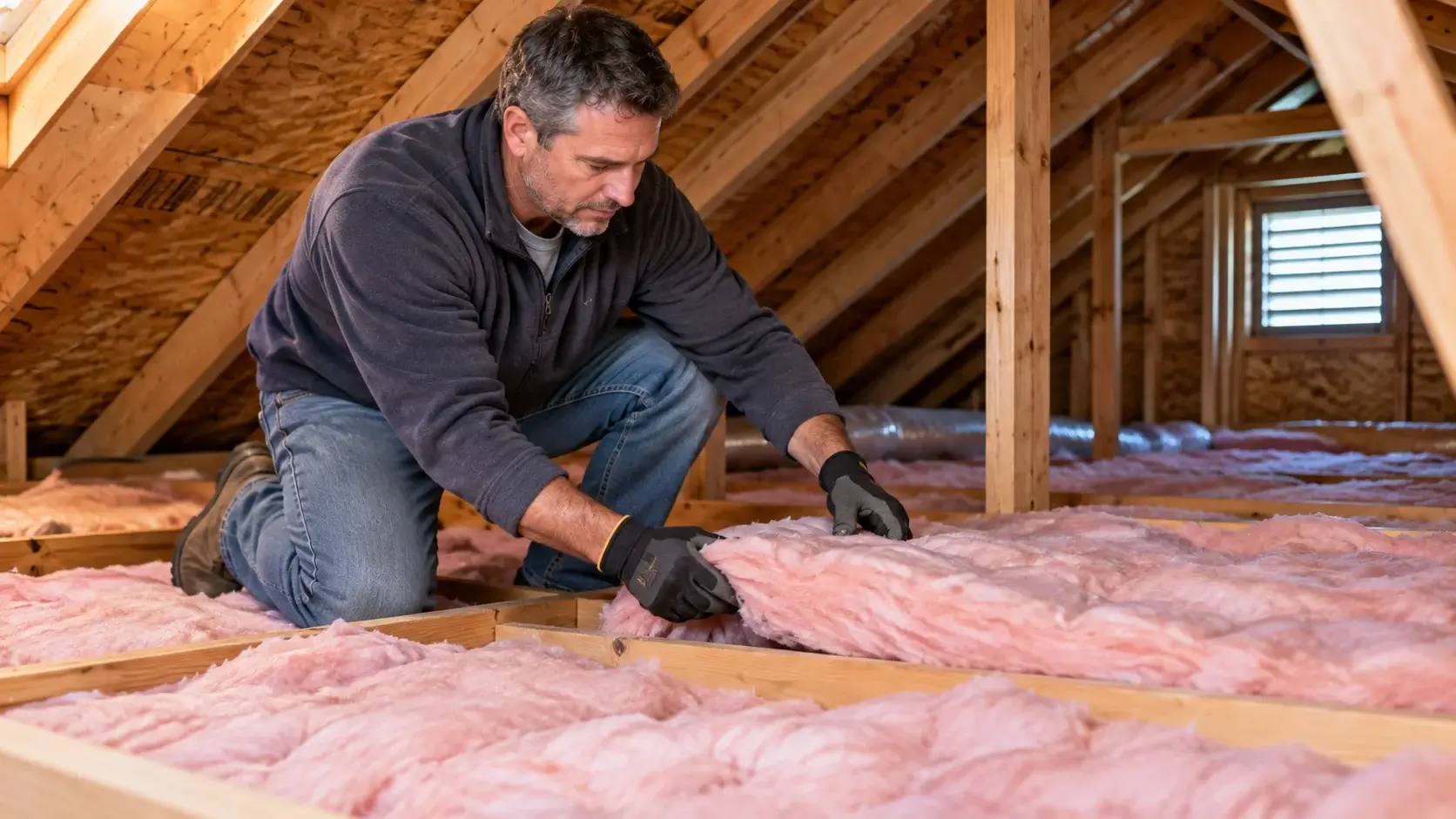
1. Check Your Attic Insulation
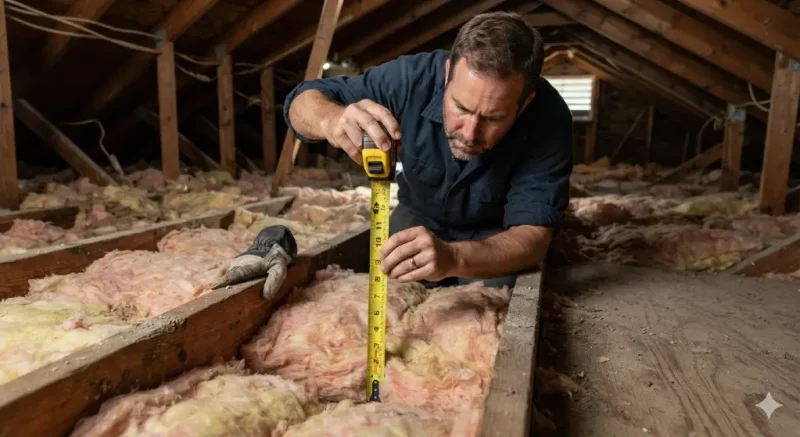
When your attic lacks proper insulation or has air leaks, warm air from your living space escapes into the attic and heats the underside of your roof deck.
Start with your attic.
Adequate insulation helps reduce the amount of heat moving from your living space into the attic and roof assembly.
If your attic has very little insulation, uneven coverage, compressed insulation, or obvious gaps, it may be contributing to heat loss.
Look for:
- Areas with little or no insulation
- Uneven insulation depth
- Exposed attic floor
- Compressed insulation
- Gaps around the edges of the attic
- Areas where insulation has been moved
- Darkened insulation that may indicate air movement
ENERGY STAR recommends checking attic insulation levels and adding insulation when necessary.
If you’re considering adding insulation, don’t simply pile more material into the attic without checking the rest of the system first.
Air sealing and ventilation are also important.
How an Ice Dam Forms
- The Melt: Escaping heat warms the upper sections of the roof, causing the snow on top to melt.
- The Runoff: The melted snow turns into water and runs down the slope of your roof underneath the snowpack.
- The Freeze: When the water reaches the roof’s edge (the eaves and gutters), it hits a cold zone that is not warmed by the attic. The water instantly freezes, building up a thick ridge of ice.
- The Damage: Once an ice dam forms, additional melting water gets trapped behind it. This standing water can back up under your shingles, rotting your roof deck and leaking into your ceilings and walls.
2. Seal Air Leaks Between Your Home and Attic
Insulation slows heat transfer, but it doesn’t necessarily stop warm air from moving through gaps.
Warm air can escape into the attic through openings around:
- Plumbing pipes
- Electrical wiring
- Attic hatches
- Recessed lights
- Dropped soffits
- Ductwork
- Chimneys and flues
- Kneewalls
- Other ceiling penetrations
Those air leaks can carry both heat and moisture into the attic.
ENERGY STAR recommends addressing attic air leaks before adding insulation.
This is one reason why simply adding more insulation isn’t always the complete solution to an ice-dam problem.
Insulation and air sealing work together.
A note about hot flues and chimneys
Don’t use ordinary spray foam or other combustible materials directly against furnace flues, water-heater flues, or chimneys.
These areas require appropriate clearances and materials.
If you’re unsure how to safely seal around a flue or chimney, have a qualified professional handle the work. ENERGY STAR provides specific guidance for sealing these areas because of the heat involved.
3. Make Sure Your Attic Has Proper Ventilation
It may seem strange to intentionally ventilate an attic when you’re trying to keep your house warm.
But the goal is to keep the living space warm while keeping the attic appropriately cold and ventilated.
Proper attic ventilation allows outdoor air to move through the attic and helps reduce heat and moisture accumulation.
ENERGY STAR explains that natural attic ventilation can help keep the attic cold during winter, reducing the potential for ice dams.
A typical vented attic may use a combination of:
- Soffit vents
- Ridge vents
- Gable vents
- Other roof ventilation
The exact ventilation system depends on the home’s design.
Don’t block soffit vents with insulation
This is one of the most important things to remember if you’re adding attic insulation.
Never simply push insulation into the eaves and cover the soffit vents.
Rafter vents or insulation baffles can help maintain an open air channel between the soffits and the attic.
ENERGY STAR specifically warns against covering soffit vents with insulation.
If you’re not sure whether your attic ventilation is adequate, have a roofing or insulation professional evaluate it before making changes.
4. Check Your Roof Before Winter
Your roof should be inspected before winter, especially if you’ve had ice dams or leaks in previous years.
Look for:
- Missing shingles
- Damaged shingles
- Cracked or deteriorated roofing materials
- Damaged flashing
- Problems around chimneys
- Problems around roof vents
- Sagging areas
- Signs of previous leaks
- Damaged soffits or fascia
You don’t need to climb onto the roof to perform a basic inspection.
In fact, homeowners should avoid walking on steep, wet, icy, or damaged roofs.
You can often identify obvious problems from the ground or from an accessible attic.
For a more detailed fall inspection, see our Fall Roof Inspection Checklist: 10 Things Homeowners Should Check Before Winter.
If you discover damage, have it repaired before significant snow and ice arrive.
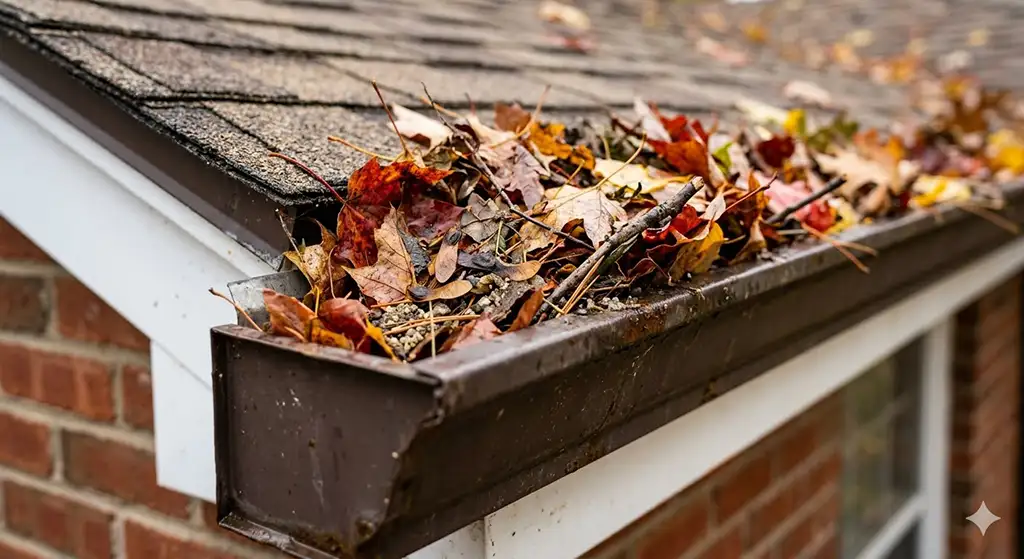
5. Keep Gutters and Downspouts Clear
Clean gutters won’t prevent every ice dam.
That’s important because homeowners sometimes assume that ice dams are simply caused by clogged gutters.
They’re not.
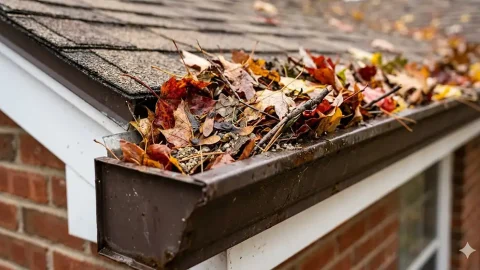
The underlying problem is generally related to snow melting and freezing along the roof edge. However, clogged or damaged gutters can interfere with drainage and make winter water problems worse.
Before winter:
- Clean leaves and debris from gutters
- Clear downspouts
- Make sure water can flow freely
- Check for damaged or sagging sections
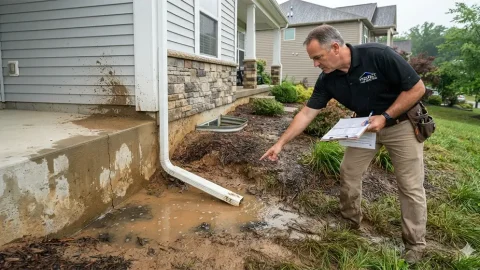
- Make sure downspouts direct water away from the house
If your gutters are difficult or dangerous to access, hire a professional rather than taking unnecessary risks on a ladder.
For more information, see:
When Should You Clean Your Gutters? A Homeowner’s Fall Guide
6. Check Your Attic for Moisture
Moisture problems in the attic deserve attention before winter.
Look for:
- Damp insulation
- Water stains
- Mold
- Darkened wood
- Frost or condensation
- Musty odors
- Moisture around vents or penetrations
Moisture doesn’t always mean that the roof is leaking.
Warm, moist air escaping from the house can condense when it reaches cold attic surfaces.
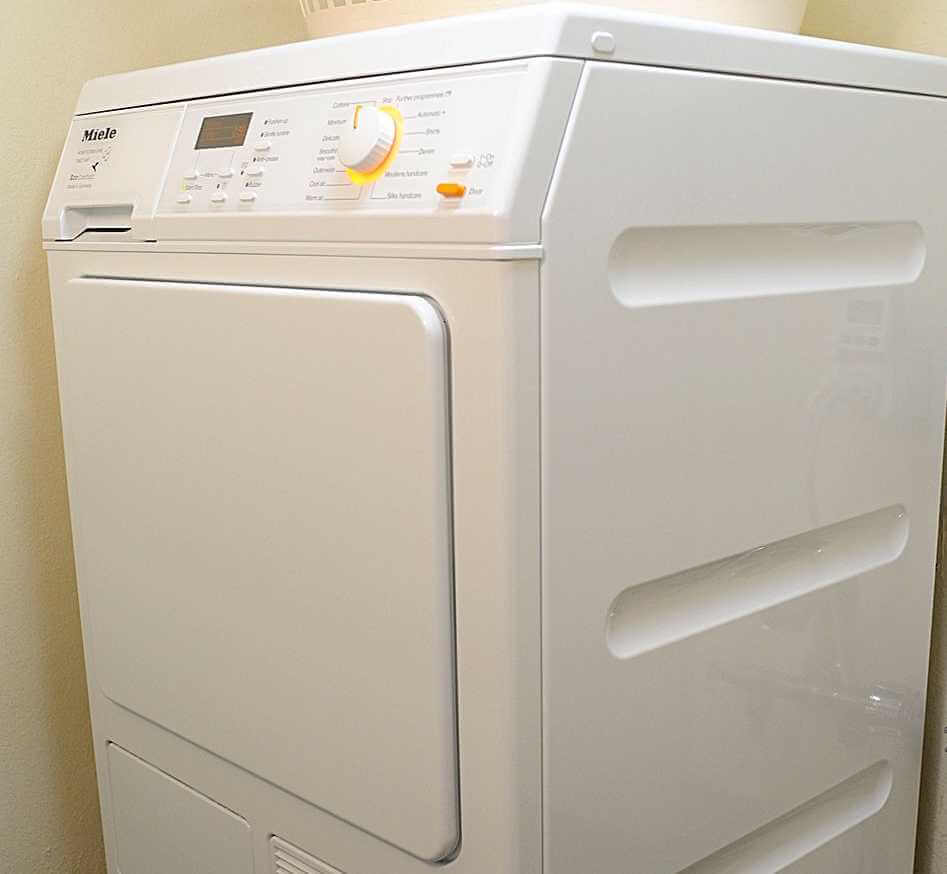
Bathroom fans, kitchen exhaust fans, and clothes dryers should also vent to the exterior rather than dumping moist air into the attic.
ENERGY STAR recommends correcting moisture and ventilation problems before undertaking attic air-sealing or insulation work.
7. Make Sure Bathroom and Kitchen Exhaust Fans Vent Outside
This is an easy detail to overlook.
An exhaust fan is supposed to remove moisture and air from the house and discharge it outdoors.
If a bathroom fan vents into the attic instead, warm, humid air can accumulate in the attic during winter.
That moisture can contribute to condensation and other problems.
Check where your:
- Bathroom exhaust fans
- Kitchen exhaust fans
- Clothes dryer
actually discharge.
If you discover a vent terminating inside the attic, have it properly routed to the exterior.
8. Look for Signs You’ve Had Ice Dams Before
If your home has experienced ice dams in previous winters, look for evidence before the next winter arrives.
Possible signs include:
- Water stains near exterior walls or ceilings
- Previous roof leaks
- Damaged shingles
- Water staining in the attic
- Damaged insulation
- Mold or mildew
- Repeated leaks near roof edges
- Large icicles during previous winters
A history of ice dams is important information for a contractor or home-energy professional.
ENERGY STAR specifically identifies a history of ice dams as a reason to consider professional evaluation of attic air sealing and insulation.
Can Roof Heat Cables Prevent Ice Dams?
Roof heat cables can melt channels through ice along the roof edge, but they generally do not address the underlying cause of ice dams.
They may be appropriate in certain situations, particularly where architectural features or other conditions make conventional solutions difficult.
However, installing heat cables shouldn’t automatically be considered a substitute for correcting inadequate insulation, air leakage, or ventilation.
If you’re repeatedly dealing with ice dams, determine why they’re forming rather than relying solely on a temporary solution.
Should You Remove an Ice Dam Yourself?
Be careful.
An ice dam can be heavy, slippery, and difficult to reach safely.
Climbing onto an icy roof with a shovel or other tools can result in a serious fall.
You should also avoid aggressively chopping at the ice with a hammer, axe, or similar tool. That can damage roofing materials.
If a significant ice dam has formed, particularly if water is already entering your home, consider contacting a qualified roofing professional or a company experienced in safe ice-dam removal.
What if water is already leaking into the house?
If you have an active leak:
- Move furniture and belongings away from the affected area.
- Place containers under dripping water if it is safe to do so.
- Protect floors and furniture from additional water.
- If water is near electrical equipment, outlets, or wiring, avoid contact with the water and address the electrical hazard safely.
- Contact a qualified roofing professional to determine the source.
- Document the damage with photographs for your records and insurance company if appropriate.
Don’t assume that stopping the visible dripping means the problem has been fixed.
What Should You Do If You Already Have Ice Dams?
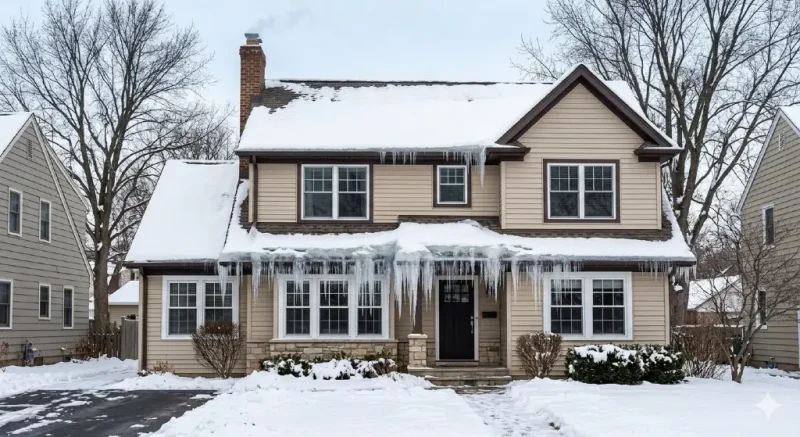
If ice has already formed on your roof, don’t wait until spring to investigate if you are seeing signs of water intrusion.
A roofing professional can evaluate the situation and determine whether immediate removal or other measures are appropriate.
After the immediate problem is addressed, investigate why the ice dam formed.
Was there:
- Inadequate attic insulation?
- Significant air leakage?
- Blocked attic ventilation?
- A moisture problem?
- A roof design issue?
- Previous roof damage?
Correcting the underlying conditions can help reduce the likelihood of the same problem happening again.
When Should You Call a Roofing Professional?
Consider professional help if:
- Your roof is steep or difficult to access
- You’ve had recurring ice dams
- Water is entering your home
- You see roof damage
- Your roof is sagging
- You have damaged or missing shingles
- Flashing appears damaged
- You aren’t sure whether your attic ventilation is adequate
- You need to modify roof ventilation
- You need repairs around chimneys or roof penetrations
- You’re uncomfortable inspecting the attic
- Snow or ice has accumulated heavily on the roof
There’s no reason to risk a fall trying to perform work that requires specialized equipment or experience.
A roofing professional can also help determine whether your problem is actually related to the roof or whether attic insulation and air sealing need attention.

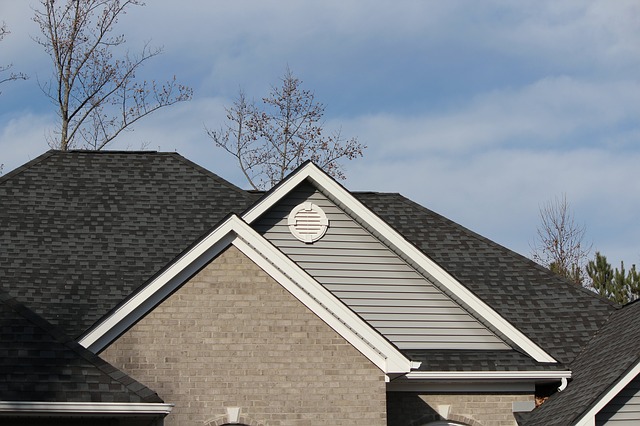
Need Help With Your Roof or Attic?
If your home has recurring ice dams, roof leaks, inadequate attic ventilation, or suspected insulation problems, it may be time to have the situation professionally evaluated.
Looking for a home improvement professional? Browse the HelpHouse Contractor Directory to find roofing, insulation, and other home improvement professionals who can help evaluate winter-related problems.
Ice Dam Prevention Checklist
Before winter arrives, check the following:
☐ Inspect the roof for missing or damaged shingles
☐ Check flashing around chimneys, vents, and other roof penetrations
☐ Inspect accessible attic areas for moisture or water damage
☐ Check attic insulation levels
☐ Look for obvious attic air leaks
☐ Make sure soffit vents aren’t blocked
☐ Check that attic ventilation is functioning properly
☐ Make sure bathroom and kitchen exhaust fans vent outdoors
☐ Clean gutters and downspouts
☐ Make sure downspouts direct water away from the house
☐ Look for signs of previous ice-dam damage
☐ Address roof problems before winter
☐ Consider professional evaluation if you’ve had recurring ice dams
Frequently Asked Questions About Ice Dams
Ice dams can form when snow melts on a warmer section of a roof and then refreezes along the colder roof edge. Heat escaping into the attic, inadequate insulation, air leakage, and ventilation problems can contribute to uneven roof temperatures.
Proper attic insulation can help reduce the heat transfer from the living space into the attic, which can reduce conditions that contribute to ice dams. However, insulation should be considered together with air sealing and proper attic ventilation.
Proper attic ventilation can help keep the attic colder in winter, reducing the potential for snow to melt unevenly on the roof. Ventilation needs to be designed and maintained correctly, and soffit vents should not be blocked by insulation.
Clogged gutters don’t normally cause the initial formation of an ice dam. Ice dams are primarily associated with snow melting and refreezing along the roof. However, clogged or damaged gutters can interfere with drainage and contribute to winter water problems.
Heat cables can provide a way to create drainage channels through ice in some situations, but they don’t necessarily correct the underlying conditions that caused the ice dam. Recurring ice dams should be investigated rather than relying solely on heat cables.
Small amounts of ice may sometimes be addressed safely from the ground, but homeowners should be extremely cautious about climbing onto an icy roof or chopping at an ice dam. Significant ice dams or active leaks are better handled by professionals with the proper equipment and experience.
Recurring ice dams can indicate problems with attic insulation, air leakage, ventilation, roof design, or a combination of factors. ENERGY STAR identifies a history of ice dams as a reason to consider professional evaluation of attic air sealing and insulation.
Large icicles can occur for several reasons, so they don’t automatically prove that an ice dam exists. However, large icicles combined with snow accumulation, uneven roof melting, or water intrusion can be a warning sign that the roof and attic should be evaluated.
Final Thoughts About Ice Dams
Ice dams are much easier to deal with before they form.
Rather than waiting for a major snowstorm and then trying to remove a thick layer of ice from your roof, use the fall to inspect your attic, check your insulation, address air leaks, verify attic ventilation, clean your gutters, and repair roof problems.
The goal isn’t simply to keep your gutters free of ice. It’s to keep your roof temperature as consistent as possible and prevent warm air from the living space from unnecessarily reaching the roof deck.
If you’ve had recurring ice dams in the past, that’s especially important. The problem may be telling you that something in your attic, insulation, ventilation, or roof system needs attention.
And if the job involves climbing onto an icy roof, repairing roofing materials, changing ventilation, or investigating recurring leaks, leave the dangerous work to a qualified professional.
Continue Your Fall & Winter Home Maintenance
Continue learning with these related HelpHouse guides:
- How to Improve Your Home’s Insulation Before Winter
- How to Seal Drafty Windows and Doors Before Winter
- Fall Roof Inspection Checklist: 10 Things Homeowners Should Check Before Winter
- When Should You Clean Your Gutters? A Homeowner’s Fall Guide
- How to Prepare Your Home for Colder Weather: 15 Things to Do Before Winter
- Winter Home Fire and Heating Safety: How to Protect Your Home
Are you a contractor?
Help homeowners find your business by listing your company in the HelpHouse Contractor Directory.